Different countries and organizations have their own standards, but most follow similar guidelines. Gluten-Free Certification verifies compliance with FDA or international standards. There are many illnesses that may require patients to follow a gluten-free diet including people with Celiac Disease, wheat allergies and general gluten sensitivity to which recommended diets are available from Johns Hopkins Medicine.
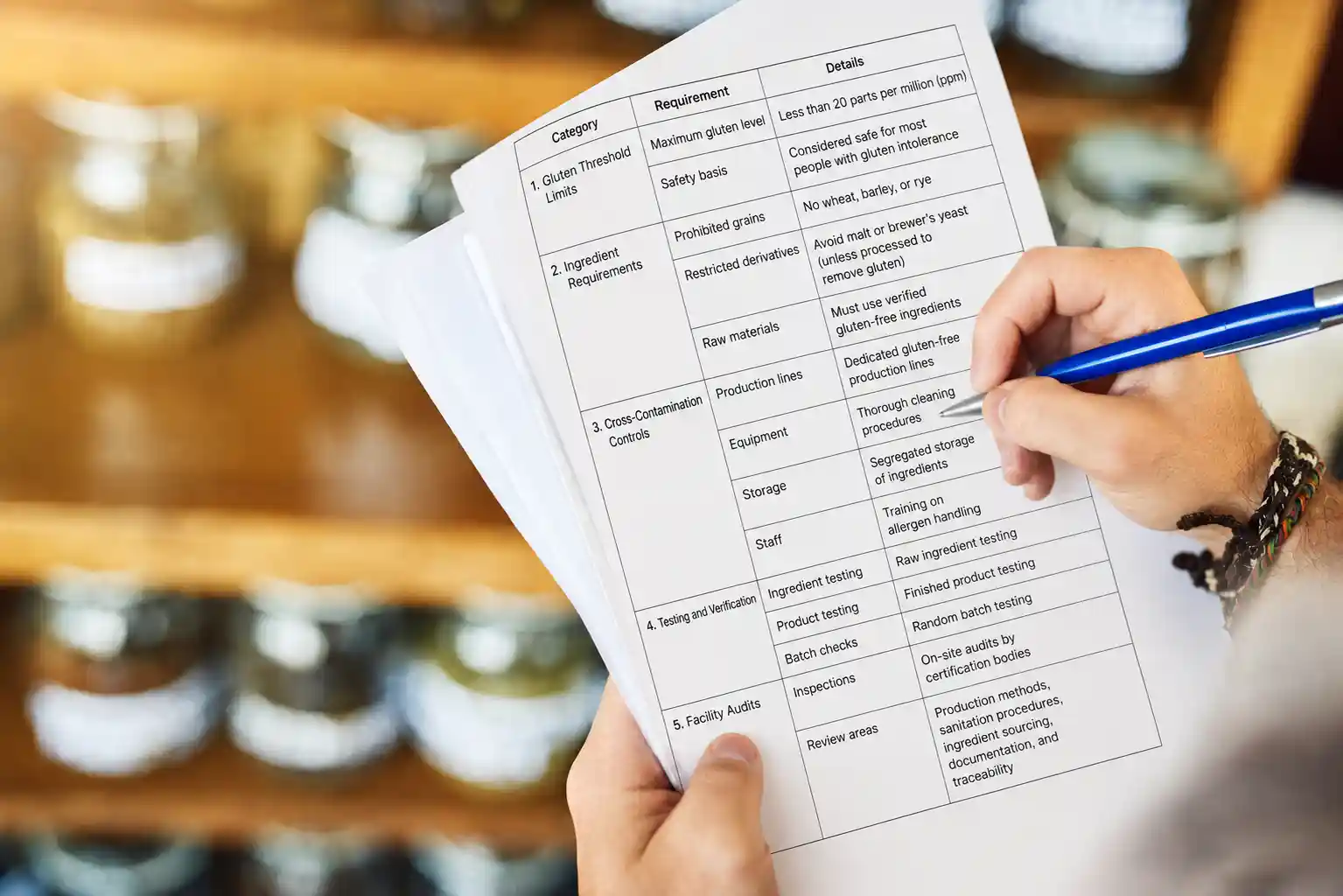
| Category | Requirement | Details |
| 1. Gluten Threshold Limits | Maximum gluten level | Less than 20 parts per million (ppm) |
| Safety basis | Considered safe for most people with gluten intolerance | |
| 2. Ingredient Requirements | Prohibited grains | No wheat, barley, or rye |
| Restricted derivatives | Avoid malt or brewer’s yeast (unless processed to remove gluten) | |
| Raw materials | Must use verified gluten-free ingredients | |
| 3. Cross-Contamination Controls | Production lines | Dedicated gluten-free production lines |
| Equipment | Thorough cleaning procedures | |
| Storage | Segregated storage of ingredients | |
| Staff | Training on allergen handling | |
| 4. Testing and Verification | Ingredient testing | Raw ingredient testing |
| Product testing | Finished product testing | |
| Batch checks | Random batch testing | |
| 5. Facility Audits | Inspections | On-site audits by certification bodies |
| Review areas | Production methods, sanitation procedures, ingredient sourcing, documentation, and traceability |
Major Gluten-Free Certification Organizations
It is very important for companies to understand the full extent of undertaking the responsibility of producing gluten free products. A full guide explaining the benefits of gluten-free certification is readily available and beneficial to people following gluten-free diets to understand what it takes to get their food certified.
Several trusted organizations provide certification globally:
- Gluten-Free Certification Organization
- Coeliac UK
- Beyond Celiac
Each organization has its own logo, which appears on certified products.
Certification vs. “Gluten-Free” Label
Not all “gluten-free” labels mean the same thing.
Certified Gluten-Free:
- Verified by a third party
- Regular testing and audits
- Stricter standards
Self-Labeled Gluten-Free:
- Manufacturer claims compliance
- Must meet legal standards
- May not involve external verification
How Products Become Certified Gluten-Free
The certification process typically involves:
| Requirement | Description | Why It Matters |
| Gluten Threshold | Must contain less than 20 parts per million (ppm) of gluten | Ensures safety for people with gluten intolerance |
| Ingredient Compliance | No wheat, barley, rye, or unsafe derivatives | Prevents direct gluten exposure |
| Cross-Contamination Control | Dedicated facilities or strict cleaning and separation procedures | Reduces risk of accidental gluten contamination |
| Product Testing (not mandatory for all products) | Regular lab testing of ingredients and finished products | Confirms ongoing compliance with gluten-free standards |
| Facility Audits | On-site inspections by certification bodies | Ensures proper processes and food safety practices |
| Documentation & Traceability | Detailed records of sourcing, production, and handling | Improves transparency and accountability |
1. Manufacturer Applies for Certification
- The manufacturer contacts a third-party certification body.
- They submit an application listing:
- Products to be certified
- Manufacturing locations
- Production processes
- Ingredient lists
- Certification is voluntary but provides independent verification.
2. Product and Ingredient Review
- Every ingredient used in the product is evaluated.
- Certification teams check for:
- Wheat, barley, rye, or derivatives
- Risky ingredients (e.g., oats, flavorings, fermentation media)
- Supplier documentation
- Ingredients are assigned risk levels, and high-risk ones may require testing before use.
3. Risk Assessment of Manufacturing Process
- The certifier assesses:
- Shared equipment
- Production scheduling
- Cleaning procedures
- Raw material handling
- This step identifies potential cross-contamination risks.
4. Gap Analysis / Pre-Assessment
- A “gap audit” compares current practices with certification requirements.
- Manufacturers implement improvements before formal audit.
- This may include:
- Allergen control plans
- Staff training
- Documentation systems
5. Implementation of Gluten-Control System
Manufacturers must establish:
- Dedicated or controlled production lines
- Segregated ingredient storage
- Validated cleaning procedures
- Supplier approval programs
- Traceability systems
These controls form the gluten-free management system.
6. Testing of Ingredients and Products
Testing may include:
- Raw ingredient testing
- Equipment surface testing
- Finished product testing
- Batch or lot testing
- Laboratory analysis (e.g., ELISA or PCR methods)
Testing frequency depends on ingredient risk and facility setup.
7. On-Site Facility Audit
An auditor visits the manufacturing facility to review:
- Production flow
- Sanitation procedures
- Cross-contamination controls
- Storage practices
- Documentation and traceability
- Staff training records
The facility must demonstrate compliance with the standard.
8. Certification Decision
- If the audit and testing meet requirements:
- Certification is granted
- The manufacturer is allowed to use the certification logo
- If not, corrective actions must be completed before approval.
9. Use of Certification Mark on Products
- Certified products may display a recognized gluten-free symbol.
- The symbol indicates third-party verification of gluten-free safety.
10. Ongoing Monitoring and Compliance
Certification does not end after approval. Manufacturers must:
- Continue regular product testing
- Submit test results periodically
- Maintain records
- Report any gluten detection immediately
- Participate in proficiency testing programs
11. Annual Re-Audits
- Facilities undergo routine audits (typically yearly).
- Certification can be suspended if standards are not maintained.
12. Continuous Improvement and Updates
Manufacturers must:
- Notify certifiers of ingredient changes
- Re-validate processes
- Update risk assessments
- Maintain documentation for traceability
How to Identify Certified Gluten-Free Products
When shopping, look for:
- Official certification logos
- “Certified gluten-free” labels
- Clear ingredient lists
- Allergen statements
These indicators help you make safer food choices.
What to avoid when shopping:
- Products only labeled as “wheat-free” as they may still contain barley or rye
- Non-labeled products
- Products that were not produced in a gluten-free facility
Frequently Asked Questions (FAQs)
It means a product has been independently tested and verified to meet strict gluten-free standards.
Yes. Certified products undergo additional testing and auditing, making them more reliable for people with Celiac Disease.
Most certification programs require products to contain less than 20 ppm of gluten.
No. Certification is voluntary, so some products may be labeled gluten-free without third-party verification. Gluten-free certification is a process that includes the ins and outs of making sure a company is compliant with gluten-free requirements.
Gluten-free certification provides an extra layer of safety and trust for consumers who must avoid gluten. By ensuring strict testing, ingredient control, and manufacturing standards, certification programs help protect those with gluten-related conditions.
When in doubt, choosing certified gluten-free products is one of the safest ways to maintain a gluten-free lifestyle.
Can’t find what you’re looking for?